|
dimanche 1er juin 2025
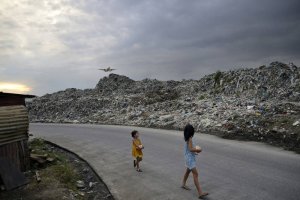
Un lent voyage vers HadèsL’homme est-il au-dessus de la nature ? Ou existons-nous en fonction de la nature ? Ou est-il plus raisonnable, dans une perspective contemporaine, de considérer l’homme et la nature comme les pôles opposés d’un jeu à somme nulle ? Dans les tableaux de Caspar David Friedrich, le spectateur est constamment confronté à des questions concernant la place de l’homme dans l’univers et sa relation avec la nature. par Martial Verdier , Martin Schibli et Olof Jarlbro |
Suède

|
dimanche 1er juin 2025
Slow journey towards HadesIs man above nature ? Or do we exist on nature’s terms ? Or is it more reasonable from a contemporary perspective to regard man and nature as opposite poles in a zero-sum game ? In Caspar David Friedrich’s paintings, the viewer is constantly faced with questions based on man’s place in the universe and his relationship with nature. Friedrich’s paintings often interact in that man is something other than nature, but at the same time man and nature are also part of something greater in common. par Martin Schibli et Olof Jarlbro |
|
dimanche 27 décembre 2020
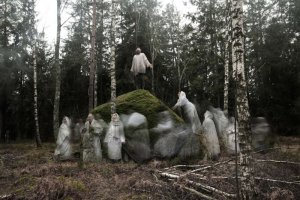
The Stone of the HeavensSome stories bring forth images, clear and suggestive, like film sequences. That which is told may seem incomplete and fragmentary, but images come forth. Maybe it is the incomplete and lingering question marks that strengthen the image ? In the artwork The Stone of Heavens I have tried to approach a story that I was told years ago, a story that has stayed with me since. The work consists of staged photographs that have been shot at the place where everything happened, and the research I have done around the story. par Karl Magnus Petersson |
|
lundi 30 novembre 2020
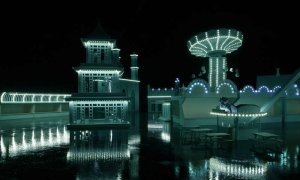
On Karl Magnus Peterssons artistic practiceKarl Magnus Petersson’s world moves between history, memory and cultural heritage with its impact on the present here and now. The artist captures fragments of events which can now be seen as past memories that may seem uncertain in the interplay between a public official history writing, the collective and the private memory. Memories that work in the past but to a very high degree can be real for their contemporaries, even if they are forgotten, repressed or hidden. They grab our attention. par Karl Magnus Petersson et Martin Schibli |

|
mardi 27 janvier 2015
La voix des fantômesConnu aujourd’hui pour son travail remarquable sur des épaves photographiées dans les fonds marins, Magnus Petersson, photographe né en 1971, a produit auparavant des séries qui malgré des sujets apparemment différents, n’en portent pas moins les mêmes stigmates : aucun humain, une atmosphère d’après la fin du monde, ou d’un monde, des tons tendant vers le monochrome, une présence de lignes géométriques contrariées, un temps immobile et l’imprescriptible impression que ce que l’on voit est en même temps une image d’objets réels et une image faite à partir de maquettes ou de modèles réduits. par Jean-Louis Poitevin et Karl Magnus Petersson |