Accueil > Les rubriques > Appareil > Société > Pigeon Hill Portraits : Then and Now
Pigeon Hill Portraits : Then and Now
,
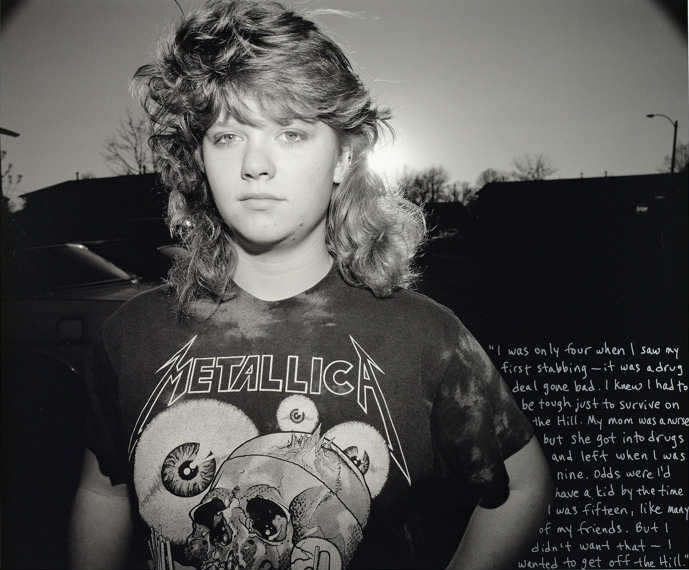
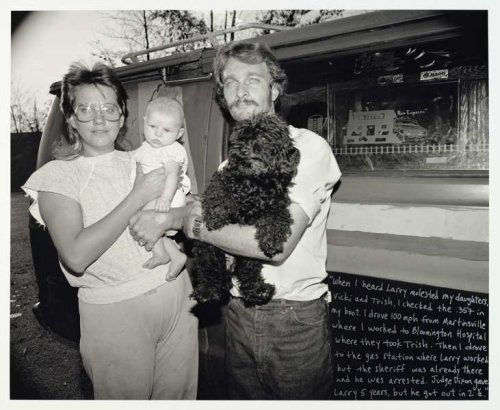
From 1987-1991, I photographed the residents of Bloomington’s housing projects, an area on the west side known as “Pigeon Hill”.
At the time, there was much discussion among politicians and the media about the problems of the welfare state and with crime and drug abuse (the crack epidemic was in full swing) and enduring poverty. Since my father grew up in tenements in New York in dire economic straits with a single mother and four brothers, I felt a kind of connection to the problem. I made nearly 3,000 negatives with my medium format camera over nearly five years.
In 1991, I moved on to two other series which occupied most of the next 15 years of my work : “Written in Memory : Portraits of the Holocaust” and “From All Sides : Portraits of American and Vietnamese War Veterans”. I have a strong interest in memory and trauma and much of my work involves the inclusion of text and image.
In fall 2010, a woman was murdered in Bloomington and her picture appeared on the front page of the newspaper. I immediately recognized her as the subject of several of my portraits from many years ago and tried to find out more about her life by speaking with her relatives. I realized then that I wanted to locate the residents of the projects that I had photographed earlier and re-photograph them and learn more about how their lives were going, a full generation later.
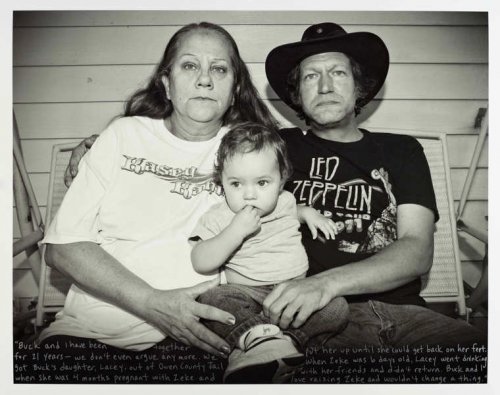
At first it proved difficult to find former subjects. To aid in this process and to pay back the community for allowing me into their lives 20 years earlier, I taught a photography class to kids at the local Boys and Girls Club. After class I would wander the neighborhood with a box of portraits from 20+ years earlier, asking everyone I met if they could identify any of the faces. Eventually I found one of the people I had photographed years ago—it was eerie and thrilling to finally come face to face with someone I had photographed many times in the distant past and to see how her face had changed from a teenager to a grown woman over the course of time.
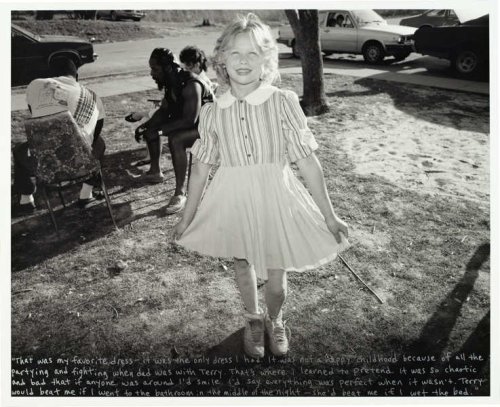
She helped me find others who in turn put me in touch with still others I had previously photographed. I have re-photographed over 75 individuals so far. Some still reside on Pigeon Hill, while others have moved to nearby apartments or trailer parks. Unfortunately, some are deceased or in prison or moved away and can’t be located.
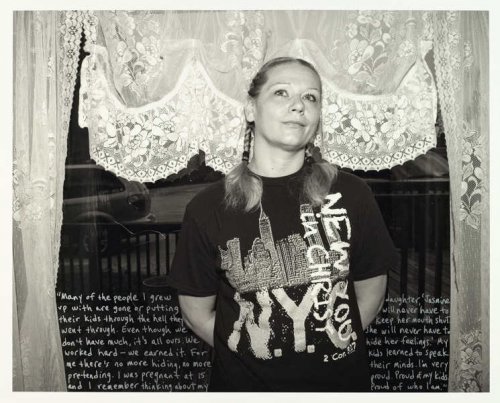
The economic condition of many of these individuals remains poor, while others now live solidly middle-class lives. More than a few of the residents are firmly entrenched in the criminal justice system, usually for non-violent crimes such as lack of payment of child support or drug use—America has the highest incarceration rate of any country in the world. Although these issues are addressed in this series, my main interest is in the faces themselves, especially when juxtaposed with the earlier portraits. One can see the effects of the passing of time and the ways in which life’s experiences (good and bad) are written into these open and expressive faces.
Voir en ligne : http://www.jeffreywolin.com/
